Tuesday, October 1, 2013

Sharing, sharing, sharing

As I've mentioned it in a couple of blog posts before I am a big proponent of open access. Not only for any sort of publication but also for data generated through research. Data and information sharing makes all our lives as researchers easier.

The early release of DNA sequence data is common practice in some communities, e.g. genome projects do that on a regular basis and it becomes the rule rather than the exception that the community works on the annotation of the data. Unfortunately, in the barcoding community this is not common practice and many colleagues would like to have rather more time to work with their data before releasing them. There are a variety of reasons for that reaching from being afraid to be scooped by overly competitive colleagues all the way to the fear to be embarrassed for providing wrong annotations (identifications in our business) in the first place. In the latter case a more reasonable concern seems to be the fact that wrong ID's would pollute any database such as BOLD and in some instances provide wrong identifications. Indeed this could lead to some serious error propagation which is a phenomenon long known from GenBank. However, diligent work and data maintenance of barcode data owners can certainly overcome this and BOLD offers a variety of tools to help with data curation and cleansing.

Maybe the results of a new study published in PeerJ help to overcome some of those concerns as it points out the advantage of open data. Two researchers from Duke University looked at gene expression publications between 2001 and 2009 and calculated that on average studies with publicly available data are cited about 9% more often than others. It seems to pay off to have data out there in the public. In addition the study shows that researchers tend to use their own data on average for to two years after initially publishing them. Their colleagues often refer to them up to six years after data went public.Overall the number of datasets used for a single publication went up from 1-2 in the years 2002-2004 to 3 and more in the year 2010.


Monday, September 30, 2013

New cool journal

A new open-access journal started mid September and it promises to fill a void in the current publication space. I have written about data release papers before and it seems the perfect outlet for such has just been created from the publishers that are responsible for ZooKeys (the open-access competitor of ZooTaxa):

Biodiversity Data Journal (BDJ) is a community peer-reviewed, open-access, comprehensive online platform, designed to accelerate publishing, dissemination and sharing of biodiversity-related data of any kind. All structural elements of the articles – text, morphological descriptions, occurrences, data tables, etc. – will be treated and stored as DATA, in accordance with the Data Publishing Policies and Guidelines of Pensoft Publishers.

The journal will publish papers in biodiversity science containing taxonomic, floristic/faunistic, morphological, genomic, phylogenetic, ecological or environmental data on any taxon of any geological age from any part of the world with no lower or upper limit to manuscript size. For example:


  • single taxon treatments and nomenclatural acts (e.g., new taxa, new taxon names, new synonyms, changes in taxonomic status, re-descriptions, etc.);
  • data papers describing biodiversity-related databases, including ecological and environmental data;
  • any kind of sampling report, local observations or occasional inventories;
  • local or regional checklists and inventories;
  • habitat-based checklists and inventories;
  • ecological and biological observations of species and  communities;
  • any kind of identification keys, from conventional dichotomous to multi-access interactive online keys;
  • descriptions of biodiversity-related software tools.

Friday, September 27, 2013

Caribou diet

Woodland caribou (Rangifer tarandus-caribou) are the largest of all caribou subspecies in North America endemic to boreal forests. As I have detailed before in a different case I am not a big fan of subspecies and therefore I consider the woodland caribou as species but that is not the theme of this post. Actually, The numbers in woodland caribou herds have decreased over the years, their habitats have shrunk too, limiting the areas in which they can be found. Therefore, woodland caribou is considered a threatened species under Canada's Species at Risk Act.

Although there are likely multiple cumulative effects on declining caribou populations, the least studied relate to diet and food quality because these factors have been difficult to study under realistic field conditions This poor understanding of diet, has presented a key uncertainty with respect to understanding nutrition and energetics as response variables to the factors influencing population viability. Winter diet in particular may be a critical factor limiting maintenance of body fat and protein and affecting productivity.

In a new publication colleagues tried to tackle this problem with more recent methods. They compared traditional microhistology methods with DNA Barcoding of fecal samples and with the analysis of videos from collared animals in the wild. Microhistological methods in this context encompass the microscopic search for unique and identifiable plant or lichen pieces from undigested tissues found in a fecal sample. Not only is it difficult to find a lot of undigested material but what ever one finds needs to show enough traits to assign it to a particular species.

Based on more traditional methods such as direct observation and microhistology it was assumed that only a few lichen and woody plant species make up the diet of woodland caribou. It looks like the opposite is true. The researchers retrieved DNA Barcodes for 76 species consumed by woodland caribou, comprising 32 lichen species, 19 tree species, 11 moss species, and 11 species of herbs and grasses. They also present high variability of the proportion of lichen species among the sampled individuals. These results were corroborated by video camera estimates of their winter diet composition.

Overall it becomes clear that these two new technologies, video cameras and DNA Barcoding, can be used to determine the diet of woodland caribou. I would dare to add that only those can actually help to understand the caribou diet to an extend that leads to most effective conservation strategies. Especially DNA Barcoding provides an unprecedented species resolution for this type of samples especially when a reference library of sufficient size and quality is in place as it was in this case (500 species of plants and lichens).

Barcoding provides high species resolution at a fraction of the cost of video estimates, but does not provide the secondary information on habitat types, encounter rates with critical food types, and degree of feeding selectivity provided by animal-borne video technology.


Thursday, September 26, 2013

New electric fish

Akawaio penak (Maldonado-Ocampo,
López-Fernández, Taphorn, Bernard, Crampton & Lovejoy 2013
)
The bluntnose knifefishes (family hypopomidae) are known from freshwater in Panama and South America. They are so called electric fishes which are known to produce electrical fields from a specialized structure called the electric organ. The electric organ consists of modified muscle or nerve cells, which became specialized for producing bioelectric fields far stronger than those that normal nerve or muscle cells generate. By using this organ the fishes are capable to create a single electrical output which is called electric organ discharge (EOD). Some species can emit an EOD powerful enough to stun prey. The amplitude of the signal can range from 10 to 600 Volts with a current of up to 1 Ampere. However, most electric fish usually generate a discharge that is less than one volt in amplitude. These are too weak to stun prey and instead are used for navigation, object detection and communication with other electric fish that have specific capabilities to detect EOD's. The bluntnose knifefishes belong to the group of weakly electric fishes. 

During a recent expedition to Guyana led by Hernán López-Fernández from the Royal Ontario Museum researchers discovered a new species of bluntnose knifefish. Akawaio penak, was discovered in the shallow, murky waters of the upper Mazaruni River in northern Guyana. The upper Mazaruni River is a hotspot for biological diversity, yet remains largely unexplored because of its remote location. The area contains countless rivers on top of a series of uplands that have remained isolated from the rest of South America for more than 30 million years. 

In their paper the researchers describe the specimens not only as a new species but also as a new genus based on characters of external morphology. The phylogenetic affinities of the new genus were inferred using data from one nuclear (rag2) and two mitochondrial (COI and cyt b) genes. 

Akawaio penak has a long organ running along the base of the body that produces the electric field. The electric field is used to navigate and to communicate with other members of the species. This trait is advantageous given the murky habitats of the habitat. The species is named in honour of the Akawaio Amerindians that populate the upper Mazaruni. The region is increasingly suffering from freshwater habitat degradation as a consequence of gold-mining in the area.

NESCent-EOL-BHL Research Sprint

From the inbox:

Call for proposals for NESCent-EOL-BHL Research Sprint

The National Evolutionary Synthesis Center (NESCent), Encyclopedia of Life (EOL), and Biodiversity Heritage Library (BHL) announce a call for proposals for a research sprint event to take place at NESCent in February 2014.

EOL currently has text and/or multimedia information on more than 1.3 million taxa from more than 250 content providers.  Structured data (species interactions, numeric data, and controlled vocabulary data) are coming soon. BHL has digitized more than 41 million pages of legacy biodiversity literature.  During the research sprint, biologists will use EOL and BHL to address outstanding and novel questions about the ecology and evolution of biodiversity. Successful applicants will be matched with an informatician, in two-person teams, and receive support to travel to and work on-site at the National Evolutionary Synthesis Center for four days.

For more information on the event and to get proposal instructions, please visit http://eol.org/info/nescent_EOL_BHL.

Applications must be submitted no later than 15 November 2013.

Questions regarding the NESCent-EOL-BHL Research Sprint should be directed to Craig McClain (cmcclain@nescent.org) or Cynthia Parr (parrc@si.edu).

Tuesday, September 24, 2013

Cryptic invasion

Baseodiscus sp. (taken from http://www.ucmp.berkeley.edu)
Cryptic invasion occurs when native and non-native populations are difficult to distinguish from one another. This presents a challenging set of circumstances, where a non-native invader remains undetected or underestimated. Cryptic invaders can also displace native populations, often forcing difficult management decisions as to which populations to control. (taken from Albert Carbo's course website on Phragmites)

Doesn't that sound like a problem that has been designed for DNA Barcoding? Not convinved? Well, then let's talk about ribbon worms. These animals have their own phylum, Nemertea. They are usually less than 20 cm long,  but you can find several references to a find of one specimen that has been estimated at 54 m! Interesting animals, most of which are marine, but there are a few freshwater species, and even a few species that live in moist tropical habitats on land. Ribbon worms were once classified close to the flatworms, which they superficially resemble but more modern molecular analyses place them more closer to annelids and molluscs .The phylum comprises about 1000 species and they are difficult to tell apart:

Morphology-based nemertean taxonomy is a highly specialised discipline: proper fixation and histological procedures are essential for the correct morphological identification in several groups. Most of the material collected during previous marine expeditions was of poor quality for histological studies, due to differences in fixation and anaesthetisation protocols, and thus, the correct identification of those specimens has been impeded. Within the Nemertea, the taxon Palaeonemertea is a group that often lacks external morphologically discriminant characters; thus, an anatomical analysis is usually essential. Identification of members of the genus Cephalothrix, composed of 28 named species, which we analysed here, is based on very subtle and hard-to-interpret characters.

This is the introductory paragraph of a paper published earlier this year by researchers from the Museo Nacional de Ciencias Naturales in Madrid. Their work which was a combination of morphology and DNA Barcoding unveiled an ongoing invasion of a pacific species, Cephalothrix simula into the Mediterranean Sea:

We consider Cephalothrix simula to be an alien invader whose larvae could have been introduced to their distribution area in the ballast waters of ships. The presence of the same haplotypes in different invaded areas and in its natural distribution range suggests several invasion events. The Mediterranean Sea is one of the world’s regions most affected by biological invasions, mainly since the opening of the Suez Canal. However, the presence of Cephalothrix simula from the eastern Mediterranean Sea has not been reported, and the invasion of Atlantic localities cannot be explained by the hypothesis of a Lessepsian migration to the Mediterranean Sea. In this context, it is possible that environmental changes produced by climate change are currently facilitating the settlement of this species. The presence of developed gonads in one specimen and the presence of juvenile individuals reveal that reproduction is occurring in the invaded areas.

The authors also state that the utility of DNA Barcodes is currently hampered by the fact that there aren't many barcode sequences available for nemerteans. At the time they were writing the paper only about 6% of the species were barcoded. A quick look today on BOLD tells me that we are now at about 13%.

Monday, September 23, 2013

Round gobies

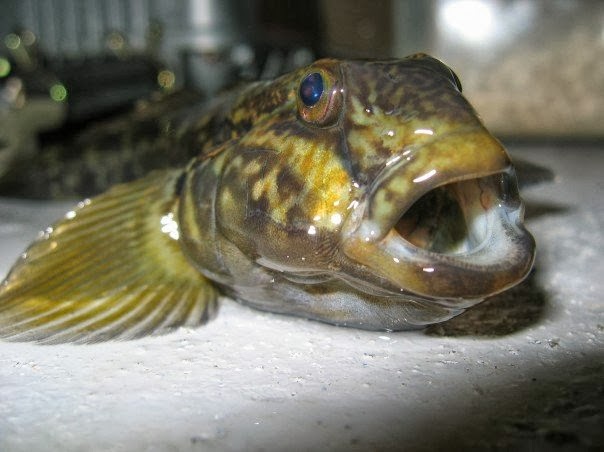
Humans have massively changed many river systems over the last decades. In order to improve ship passages, rivers have been straightened, deepened, and river banks reinforced.  Often the natural river bed has been altered. On top of that water temperatures are rising as a result of climate change. All of those changes actually provide perfect conditions for the round goby (Neogobius melanostomus), a fish traditionally found in the lower stretches of the Danube and along the coasts of the Black Sea. Today, however, Neogobius melanostomus can be found in the headwaters of the Danube as well as in the Rhine, the Baltic Sea and even the Great Lakes in North America.

Scientists at the Technische Universität München have teamed up with the Bavarian State Collection of Zoology to investigate the strategies round gobies use to conquer new stretches of river and the impact on the local ecosystem and existing food webs. The researchers focused on the Danube River especially its headwaters where the species arrived only a few years ago probably as a stowaway in the ballast water of ships.

Founding individuals are usually particularly strong and powerful fish that are able to consume a broad range of food and thereby outperform other species. Gradually this process eliminates native fish species such as the barbel (Barbus barbus) and European chub (Squalius cephalus). Established round goby population already account for over 70 percent of the entire fish stock in some areas. The round goby is also reducing the diversity and abundance of invertebrates. In particular stoneflies, caddisflies and mayflies quickly become the preferred prey of the fish in their new habitat.

The round goby is not the only fish species advancing upstream from the Black Sea. There are currently five different goby species from the lower Danube making their way up the river. And the fish are not the first new settlers. They have already been preceded by many exotic snails, mussels and freshwater amphipods, some even hailing from other continents, e.g. Asia. Like the gobies, a number of these animals dominate the native fauna now. The goby invasion also has led to a 'novel ecosystem' in the headwater of the Danube comprising previously unknown combinations of species. This is not unique to the Danube, however. There are similar developments in the Rhine and in the Great Lakes of North America.

Jürgen Geist  is one of the authors of this publication and he states:  "What we are observing is a very flexible and robust network of different species that adapts itself perfectly to new environments...". "Biodiversity is declining and once the original ecosystem is lost, we can never go back."